Olivia Lange · 14 September 2026
Corporate Breathing Routines Spark Fresh Classroom Strategies for Sustained Attention in Polish Schools
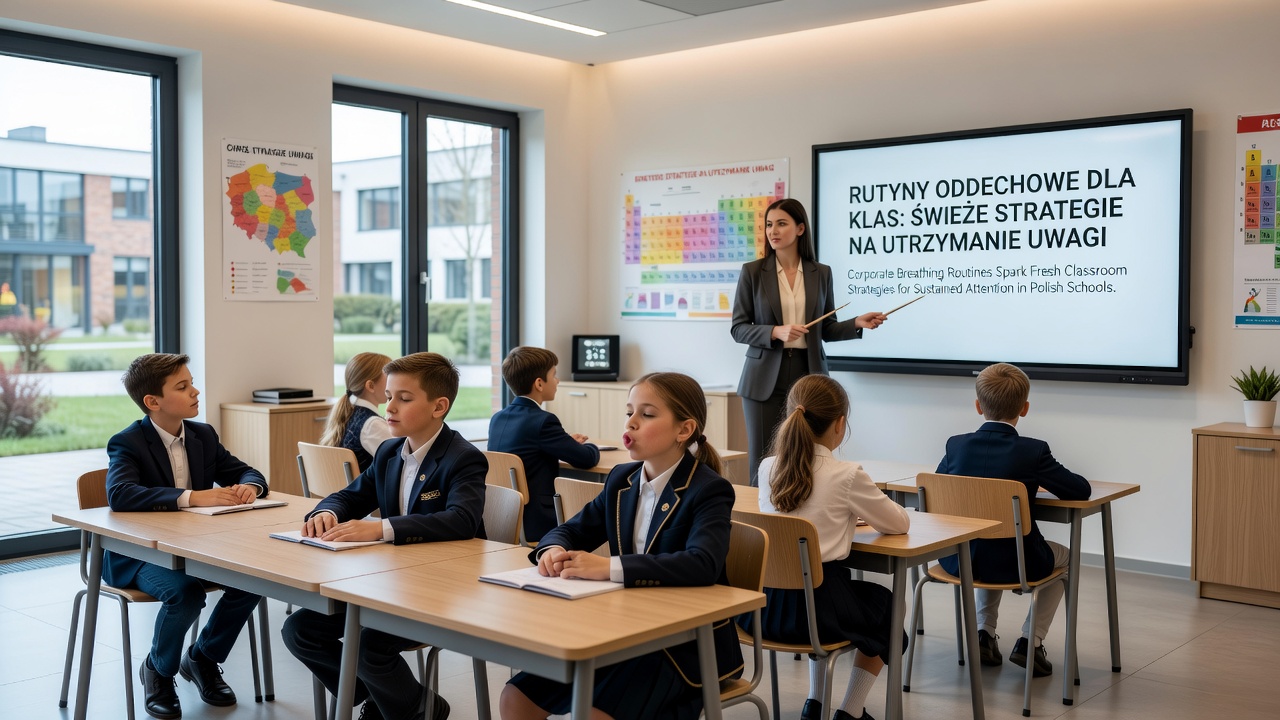
Polish educators have begun adapting breathing techniques originally developed for corporate environments, and these methods now appear in classrooms across several regions as a way to support student attention spans throughout the school day. Teachers in Warsaw, Krakow, and smaller towns report incorporating short, guided breathing sequences at the start of lessons or during transitions between subjects, drawing directly from protocols used in office settings where employees manage high-pressure deadlines. Data from pilot programs indicate measurable shifts in how students sustain concentration, with some classes showing improved task completion rates after sessions lasting just three to five minutes.
Origins in Corporate Wellness Programs
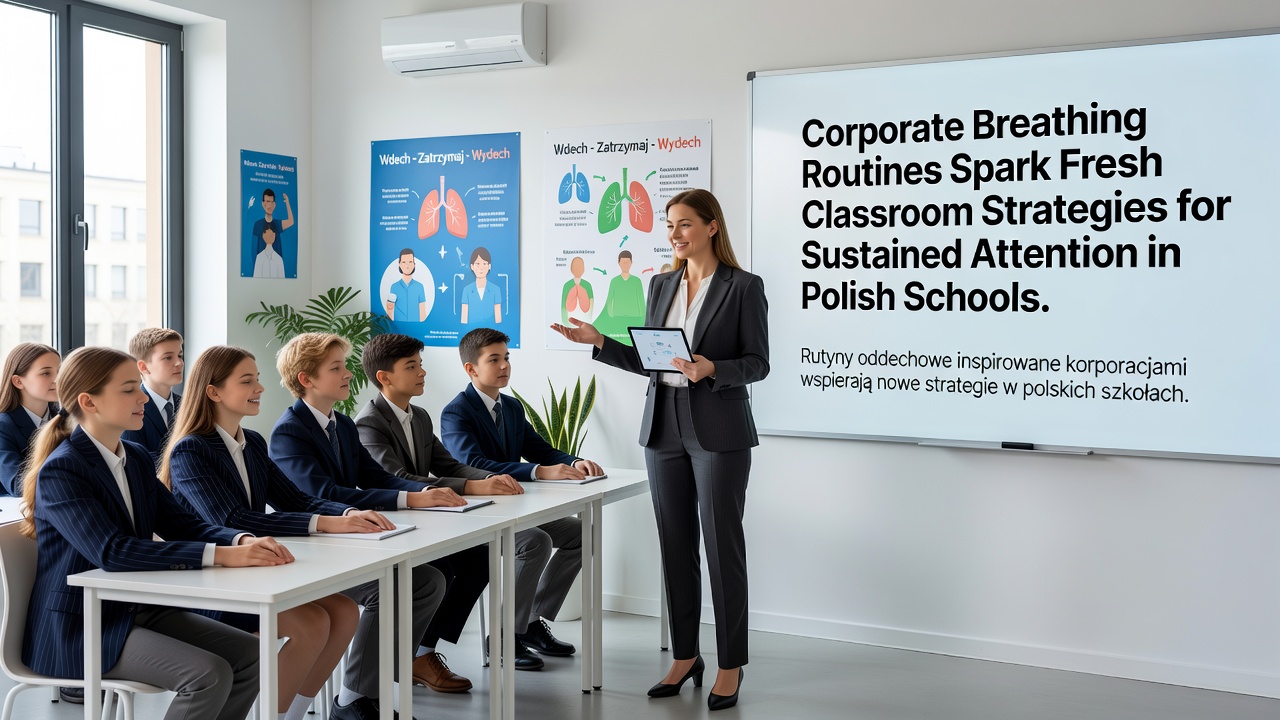
Corporate wellness initiatives have long featured controlled breathing exercises to reduce stress and sharpen focus among employees, and researchers note that similar physiological responses occur in younger populations when the same patterns receive careful adaptation. Programs at multinational firms emphasize techniques such as box breathing and diaphragmatic patterns, which help regulate heart rate variability and support cognitive clarity during extended meetings. Educational consultants in Poland observed these approaches during cross-industry workshops and began testing modified versions with secondary school groups in late 2025, adjusting timing and language to suit developmental stages. Schools that participated in the initial trials reported that students responded positively to the structured rhythm, often requesting reminders to use the methods before exams or group projects.
Implementation Across Polish Regions
By early 2026 several districts had integrated breathing routines into daily schedules, and regional education offices documented the spread through teacher training networks. In September 2026 additional schools plan to launch coordinated pilots that align with the new academic year, allowing for standardized observation periods across urban and rural settings. Training materials developed by Polish pedagogy centers include video demonstrations and progress tracking templates that mirror those used in business environments, yet they incorporate age-appropriate cues such as visual timers and group counting. Observers note that classes using these routines maintain higher engagement levels during the final hours of the school day, a period when attention typically declines according to multiple classroom studies.
Research Findings and Measurement Approaches
Studies conducted by European research consortia have tracked attention metrics before and after the introduction of breathing protocols, revealing patterns consistent with findings from workplace productivity analyses. One project coordinated through EU education frameworks measured on-task behavior using timed observation intervals, and results showed average gains of twelve to eighteen percent in sustained focus intervals for participating students. Polish universities contributed longitudinal data that compared classes employing corporate-derived techniques against control groups following standard schedules, and the differences appeared most pronounced among adolescents aged thirteen to sixteen. Researchers emphasize that these outcomes depend on consistent delivery by trained staff, rather than one-off introductions, because repetition reinforces the automatic use of breathing as a self-regulation tool.
Teachers describe practical adjustments that make the routines fit within existing lesson structures without extending overall class time. Some begin with a one-minute centering exercise followed by a brief discussion of how the technique connects to upcoming tasks, while others embed breathing cues into subject-specific activities such as language drills or science experiments. Data collected through teacher logs and student self-reports indicate that participants apply the methods outside school hours as well, particularly during homework sessions or before sports events. This transfer suggests the corporate models provide transferable skills that extend beyond the immediate classroom environment.
Training and Resource Development
Professional development programs now feature modules on adapting corporate breathing frameworks for educational use, and these sessions often include input from both workplace psychologists and classroom specialists. Materials reference guidelines from international bodies such as the OECD education reports that examine attention management across age groups, while Polish training providers add localized examples drawn from recent district implementations. Schools receive access to shared digital repositories containing audio guides in Polish and English, along with printable cue cards that students can keep at their desks. Coordination between education ministries and corporate wellness providers has accelerated the creation of these resources, allowing rapid scaling as more institutions request support.
Conclusion
Breathing routines originally refined in corporate settings continue to influence classroom practices throughout Poland, and evidence from ongoing pilots points to structured benefits for student attention when implementation remains consistent and well-supported. Districts preparing for September 2026 expansions continue to refine measurement tools and teacher preparation pathways based on data gathered during earlier phases. The approach demonstrates how techniques developed for one professional context can transfer effectively to another when adapted with attention to developmental needs and institutional structures, yielding observable changes in how students manage focus across the school day.